
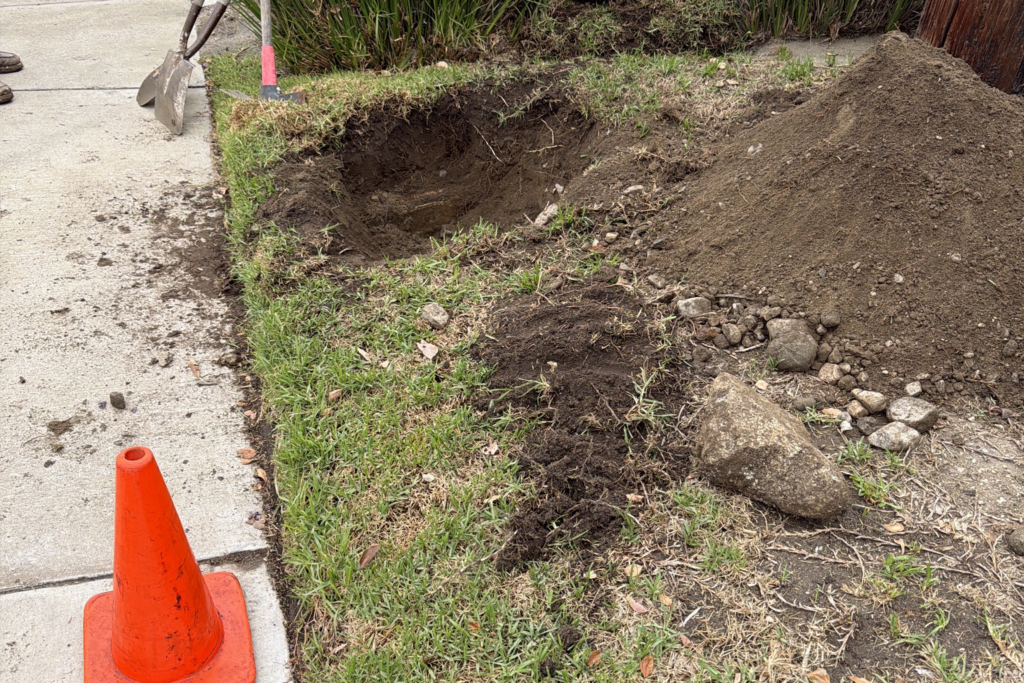
A sewer line replacement estimate should name the exact pipe being replaced, the method proposed, the access needed, the connections included, the testing, and who restores disturbed surfaces. A total without those details is hard to compare, because two contractors may be pricing quite different projects.
Before you approve a major sewer job in Los Angeles, compare the written scope with the inspection findings. Replacement may be the right call for a failed line, but recurring backups on their own do not prove the whole lateral needs replacing. Ask what the evidence supports, then check what each proposal includes.
Start with the diagnosis
A useful estimate explains the condition being corrected. A crack, a damaged joint, a collapsed section, recurring root entry, or an area that holds water can all produce similar symptoms while needing different work. Cleaning may clear a restriction when the pipe itself is still serviceable.
Ask whether the inspection covered the relevant run, and whether blockage or standing water limited what could be seen. Camera footage can document visible conditions, but the contractor should explain its limits and any locating or evaluation still needed before choosing a scope.
A sewer camera inspection can connect the proposed work to the actual problem. Ask for an explanation of the affected section and why a repair, rehabilitation, or replacement is being recommended, instead of accepting a major project based on symptoms alone.
Define which pipe is being replaced
The word “sewer” covers several parts of a property’s drainage system. A proposal should distinguish the exterior lateral from interior drains, branch connections, cleanouts, and the public sewer connection. One scope may replace the accessible exterior run while another includes work beneath the building.
Have the contractor identify the start and end points in plain language and, where useful, on a sketch or marked photo. Ask how the planned length was established, where the existing pipe will remain, and how the new work will connect to those sections.
Clarify ownership and access boundaries before scheduling. Work near a sidewalk, street, shared driveway, or easement may need extra coordination. The proposal should name who confirms the responsible parties and approvals, and do not assume every connection or public-area restoration is included.
Six details that change the project scope
A comparable estimate needs enough detail to show how the project will be carried out. These six items help explain the differences, without assuming that the highest or lowest total is automatically the better choice.
Length and end points
Ask what length of pipe is included and where the replacement stops. A short section replacement and a full lateral replacement cover different boundaries. If the measurement is provisional, find out what information is still needed and how a revised scope would be approved.
Method and suitability
The proposed method should fit the observed pipe condition and the site. Ask why open excavation, pipe replacement, or a trenchless approach is suitable, what it can correct, and which findings would make that approach impractical. A familiar method name does not prove the method fits your line.
Access and work areas
Identify every planned access opening, staging area, and equipment route. A trenchless proposal may still need excavations at access points or connections. An open-trench proposal should explain the affected route and how the work area will be managed.
Connected drains and cleanouts
Ask which branch connections and cleanouts are included, which remain, and how each will be handled. Replacing the main run does not mean replacing every drain that feeds it. The contractor should define that boundary before work begins.
Surface restoration
Backfilling an excavation, closing concrete, and restoring a finished driveway or landscaped area are separate tasks. Ask whether the proposal includes each one, who performs it, and what finish matching is possible. “Cleanup included” is not full surface restoration.
Permits and inspections
Have the contractor explain which permits, approvals, and inspections apply to the work, who obtains them, and whether related charges are included. The answer can vary with location and scope, so a generic statement should not stand in for a project-specific plan.
Compare trenchless work and open excavation by scope
A trenchless sewer repair proposal should name the approach and explain the condition of the existing line that makes it a candidate. Rehabilitation and replacement are different scopes. Ask whether the result is a lined existing pipe or a new pipe, and what each option addresses.
Open excavation can give access to remove a failed section or correct conditions that a trenchless method cannot address. That access also brings a broader restoration responsibility. Compare the actual pipe outcome with the complete access and restoration plan, not the method label alone.
If both approaches are proposed, ask each contractor to identify the same start and end points, relevant connections, completion checks, and exclusions. Different methods can be reasonable alternatives, but only a defined scope shows whether they solve the same problem.
Know what happens to branch connections and cleanouts
Connections matter because the replaced line still has to take flow from every drain that serves the property. Ask where those connections are, which ones are part of the work, and how their condition will be evaluated. An estimate should say what happens to them, not leave it implicit.
Cleanouts provide access for inspection and future maintenance. The proposal should say whether existing cleanouts remain, whether any will be added or replaced, and what surfaces must be opened to do that work. Ask where they will end up and whether you can still reach them.
If an unknown connection or deteriorated adjoining section turns up, the contractor should explain the finding before expanding the scope. Agree on who can approve a change, and on how the revised work and cost will be documented.
Separate plumbing completion from finish restoration
A working new sewer line is only part of the finished project. The yard, concrete, paving, flooring, or other disturbed surfaces may need work after the plumbing is checked. Some proposals include that restoration; others leave it to a separate contractor or to the owner.
Ask for clear boundaries around backfill, compaction where it applies, concrete closure, paving, landscaping, debris removal, and finish work. Also ask how settlement or follow-up restoration will be handled under the written agreement, rather than assuming a particular guarantee.
Photograph the affected surfaces before work starts. Where existing materials cannot be matched, talk through the expected appearance in advance. A practical restoration plan makes proposals easier to compare and cuts down disagreement at the end of the job.
Put exclusions and unknown conditions in writing
An exclusion on its own is not a problem. It becomes one when you assume the work is included and find out otherwise after the job starts. Ask for excluded work to be listed as clearly as the included work.
Check the proposal for these boundaries:
- Interior drains or piping outside the named replacement run
- Branch reconnections and cleanouts not specifically listed
- Work beyond the confirmed access or ownership boundary
- Permit, inspection, or third-party charges
- Concrete, paving, flooring, and landscaping restoration
- Removal or relocation of fixed features
- Additional work if hidden conditions differ from the inspection
- Follow-up work assigned to another contractor or the owner
An estimate may reasonably include assumptions when some conditions are hidden. Those assumptions should be specific. Ask what discovery would change the plan, how it would be shown to you, and how a change would be approved before more work goes ahead.
Questions that make two estimates comparable
Use the same questions for each proposal so you can compare the work, not just the final number:
- What inspection finding supports replacement?
- Was the relevant pipe run visible, or were portions obscured?
- Where does the proposed replacement start and stop?
- What pipe length and material are included?
- Why is the proposed method suitable for this line?
- Where are the access openings and equipment routes?
- Which branches and cleanouts are included?
- Who confirms permits, inspections, and access responsibilities?
- How will sewer service be interrupted during the work?
- What checks establish that the completed line performs as intended?
- Who restores each disturbed surface, and to what scope?
- How are unforeseen conditions and written changes handled?
If one proposal leaves an item out, ask about it before treating the omission as a saving or an added expense. A narrow repair may be appropriate, and a broader project may be justified too. The decision should follow documented conditions and clearly stated responsibilities.
Plan around sewer downtime and property access
Ask when the affected drains must stay out of use and how the contractor will tell you when they can be used again. The interruption depends on the method and scope. Do not rely on a general same-day or no-disruption promise unless there is a plan for your property.
For a rental or multi-unit property, work out which occupants and fixtures are affected and who passes along the restrictions. For a business, discuss operating hours and access needs before work is scheduled. Shared use can complicate coordination even when the pipe work itself is straightforward.
Keep children and pets away from work areas, and follow the contractor’s access instructions. Do not enter excavations, move barriers, operate equipment, or use affected fixtures during a shutdown. Sort out parking, gate access, material storage, and cleanup expectations beforehand.
Ask how the completed line will be checked
The proposal should explain the completion checks the work requires. Depending on the project, those may include an inspection, a camera review, flow checks, or other required testing. Ask what documentation you will get and how it connects to the original problem.
Confirm which checks must happen before access areas are closed and which approvals remain afterward. Where a branch, cleanout, or connection is part of the work, the completion check for it should be included in the explanation, not treated as an assumed detail.
Keep the final scope, approved changes, inspection records, and any camera documentation together. They give you a record of what was replaced, what remained, and the conditions confirmed at completion, which helps with future maintenance or repairs.
Make the replacement decision with clear evidence
A good sewer replacement estimate answers three questions: why the work is needed, exactly what will be replaced, and who completes each part of the job. Once those answers are clear, you can compare alternatives without being pushed toward more work than the evidence supports.
GS Plumbing 1 INC provides sewer repair in Los Angeles and can assess the line conditions behind a replacement recommendation. Call (323) 303-0060 to discuss the inspection findings, the proposed pipe scope, and any questions you want answered before authorizing work.