A tank water heater can take longer to recover between showers when the household uses hot water faster than the unit can replace and reheat it. That may be a temporary demand issue. When the recovery time is noticeably longer than it used to be, however, the tank may have lost usable capacity or the burner, heating element, thermostat, control, dip tube, or another component may not be working as intended.
The pattern matters. A plumber should compare what has changed before recommending a repair or replacement.
First, Make Sure the Problem Is Recovery Time
Recovery time is the period a tank water heater needs to heat replacement water after hot water has been used. It is different from waiting for hot water to travel from the tank to a distant bathroom.
- Travel delay: The water eventually arrives hot and remains hot, but a distant faucet or shower takes time to clear cooled water from the pipe.
- Reduced hot-water volume: The first shower becomes lukewarm sooner than it used to.
- Slow recovery: The first shower may be normal, but the next person must wait much longer for a useful supply of hot water.
- Unstable temperature: The water changes from hot to cool during use even when household demand has not changed.
If hot water is slow to arrive only at one fixture, the fixture or branch piping may be more relevant than the heater. If hot water runs out and remains lukewarm throughout the property, tank capacity and recovery deserve closer attention.
Tank Size and Heating Rate Set the Baseline
Every tank stores a limited amount of heated water. As someone showers, cold replacement water enters the tank. The unit must bring that new water up to the thermostat setting before the full hot-water supply is restored.
Recovery depends on several variables:
- The tank’s storage capacity.
- How much hot water the household just used.
- The temperature of the incoming cold water.
- The temperature setting.
- The heating input from a gas burner or electric elements.
- The condition of the tank and its components.
There is no single recovery time that applies to every home. A larger burner or higher-wattage element can restore heat faster than a lower-input system, while a larger temperature rise requires more time and energy. The useful comparison is the heater’s current behavior against its normal behavior under similar demand.
Back-to-Back Demand Can Temporarily Exceed Capacity
Two or more showers close together can use most of the stored hot water. Laundry, a dishwasher, or another hot-water fixture running at the same time adds to the draw. A tank that recovers normally under ordinary use can still fall behind during a busier period.
Incoming water temperature also affects the required temperature rise. When replacement water enters colder than usual, the same heater needs more time to reach the setpoint. That does not automatically indicate a defect.
Try comparing similar conditions. If the household schedule, shower length, showerhead flow, or simultaneous appliance use recently changed, demand may explain the longer wait. If demand is unchanged and recovery continues to worsen, testing is more useful than guessing.
Sediment Can Reduce Usable Capacity and Heating Performance
Minerals and debris can settle at the bottom of a storage tank over time. A significant layer may reduce the amount of usable water in the tank and interfere with heat transfer. Gas-fired tanks may make popping or rumbling sounds as water moves through deposits near the heated bottom surface. An electric unit may lose effective performance around the lower heating area.
Noise alone does not establish how much sediment is present, and slow recovery alone does not prove that flushing is the answer. Tank condition, drain-valve condition, age, and manufacturer instructions matter. Do not open the drain valve or attempt an improvised flush on an aging or unfamiliar tank. A plumber can determine whether service is appropriate and whether the tank can be handled safely.
An Electric Heating Element May Be Producing Less Heat
Many electric tank water heaters use upper and lower heating elements. A unit with one failed or weakened element may still produce some hot water, which can make the problem look like ordinary heavy use. Common patterns include a smaller usable hot-water supply, a much longer wait after a shower, or water that never reaches the expected stable temperature.
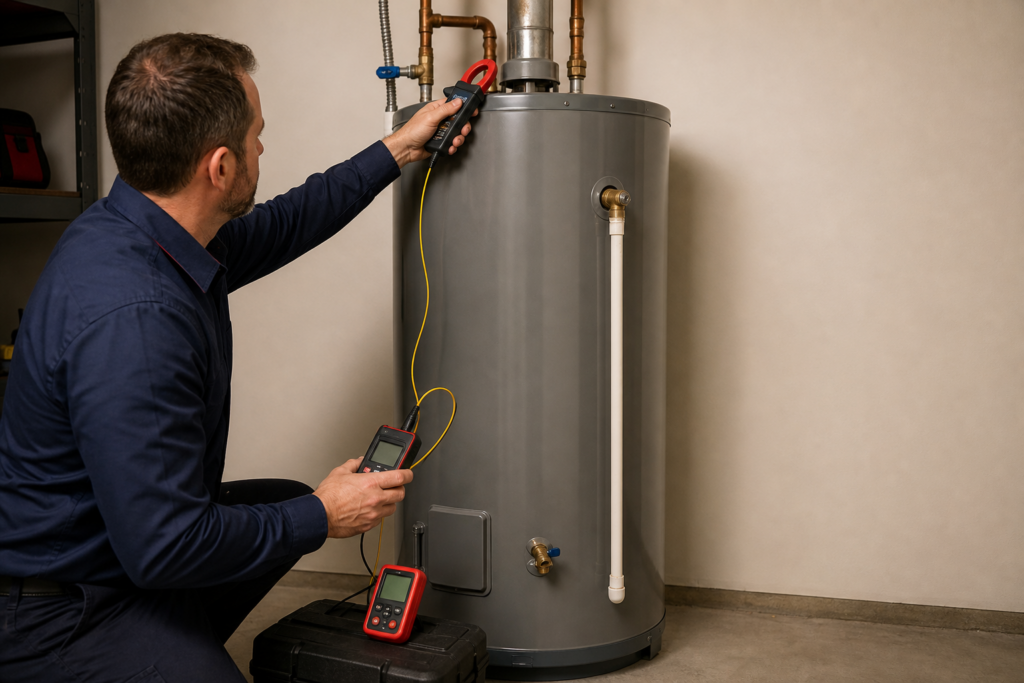
Testing an element involves electrical measurements and access to energized components. Do not remove the access covers or test live voltage. A plumber or qualified technician can verify power, element resistance, current draw, thermostat operation, and whether the upper and lower circuits switch correctly.
A Gas Burner or Control Problem Can Slow Reheating
A gas-fired tank depends on proper burner operation, combustion air, venting, temperature control, and gas-control response. If the burner does not ignite consistently or does not produce the expected heat, the tank may reheat slowly even though it still supplies some hot water.
A status light or manufacturer error code can be useful to record, but do not remove the burner cover, change gas-control settings, alter venting, or attempt repeated relighting outside the manufacturer’s normal user instructions. Combustion and venting conditions require the right instruments and safety checks.
GS Plumbing 1 INC’s water heater repair service covers tank diagnosis when hot-water output, ignition, controls, noise, or leakage changes.
Thermostats, Sensors, and Limits Affect the Heating Cycle
The thermostat or temperature control tells the heater when to begin and stop heating. A sensor that reads incorrectly, a thermostat that does not switch as intended, a gas control that responds inconsistently, or a safety limit that interrupts operation can lengthen the recovery cycle.
Turning the temperature higher is not a diagnostic test. It can increase scald risk and may hide the pattern without correcting the cause. Keep the normal setting unchanged and record whether the water reaches its previous temperature after enough recovery time.
A Damaged Dip Tube Can Mix Cold Water Too High in the Tank
The cold-water inlet usually directs replacement water toward the bottom of the tank so the hottest water remains available near the outlet. If that internal tube is damaged, incoming cold water can mix higher in the tank. The result may feel like rapid hot-water depletion or poor recovery even while the burner or elements are operating.
The dip tube is not visible during a normal exterior inspection. Its condition should be considered only after the usage pattern, temperatures, heating rate, and other accessible components are checked.
An Aging or Undersized Tank May No Longer Match the Demand
A tank can be technically operating yet no longer meet the property’s current demand. More occupants, longer showers, a new high-flow fixture, or simultaneous appliance use can expose a capacity limit that was not noticeable before.
Age and physical condition matter too. Corrosion, recurring component trouble, a leaking tank body, and declining performance can shift the practical recommendation from repair toward replacement. Capacity, recovery rate, fuel or electrical requirements, installation conditions, and actual household use should guide that decision.
Homeowners evaluating a new storage unit can review water heater installation options. A tankless water heater may be one possible configuration, but it still must be sized and installed for the required flow and temperature rise. Slow tank recovery by itself does not make tankless equipment the automatic answer.
Safe Observations Can Narrow the Cause
Useful notes can be collected without opening the heater or changing its settings:
- Record how long the first shower runs before the water becomes noticeably cooler.
- Note how long the tank has rested before a second shower produces stable hot water.
- Repeat the observation under similar household demand rather than while laundry or a dishwasher is using hot water one time and not the next.
- Check whether the same loss of hot-water volume appears at more than one fixture.
- Note any new rumbling, popping, ignition interruptions, status lights, or error codes.
- Look from a safe distance for water around the tank, fittings, or relief-valve discharge pipe.
- Record the heater model and approximate installation date if that information is already accessible without removing a panel.
Do not raise the temperature, operate the relief valve, drain the tank, remove access panels, handle wiring, or adjust the gas control. Stop using the equipment and seek appropriate help if there is a gas odor, active leakage around electrical components, scorching, or another immediate safety concern.
What a Water Heater Diagnosis Can Check
A condition-led evaluation may include:
- Comparing inlet, stored-water, and hot-outlet temperatures.
- Timing the temperature drop during a controlled draw and the subsequent recovery.
- Confirming the property’s hot-water demand and the tank’s rated capacity and heating input.
- Checking accessible fittings, shutoffs, the relief-valve area, and the tank exterior for leakage or corrosion.
- Testing electric elements, thermostats, wiring, and current draw when the unit is electric.
- Checking ignition, burner operation, combustion, venting, and gas controls when the unit is gas-fired.
- Evaluating sediment symptoms and whether tank service is safe and appropriate.
- Considering dip-tube condition when the measured pattern supports it.
- Comparing repair scope with tank age, condition, capacity, and installation requirements.
The recommendation should follow those measurements. A normal unit facing unusual demand may need no component repair. A failed element, control, or other replaceable part may be repairable. A leaking, deteriorated, or poorly sized tank may justify a replacement discussion.
Request Water Heater Repair in Los Angeles
If a tank that once handled back-to-back showers now needs much longer to recover, record the usage pattern and any noise, leakage, ignition, or temperature changes. Contact GS Plumbing 1 INC for a Los Angeles water-heater evaluation that checks demand, temperature recovery, heating components, controls, sediment symptoms, tank condition, and capacity before recommending the next step.